Soil Health Program
What is soil health?
Soil health is defined as the continued capacity of soil to function as a vital living system that sustains plants, animals and humans. Healthy soil contributes to increased soil productivity by increasing soil water infiltration capacity, organic matter content, water holding capacity, nutrient cycling and soil aggregate stability.
Farmers and other land managers are becoming more interested in soil health practices because they have the potential to improve the profitability of a farm by reducing the cost of inputs and increasing productivity. At the same time, soil health practices may help protect water resources by increasing the water holding capacity of soil and reducing the transport of pollutants to streams and lakes.
What are soil health practices?
The basic principles of soil health are:
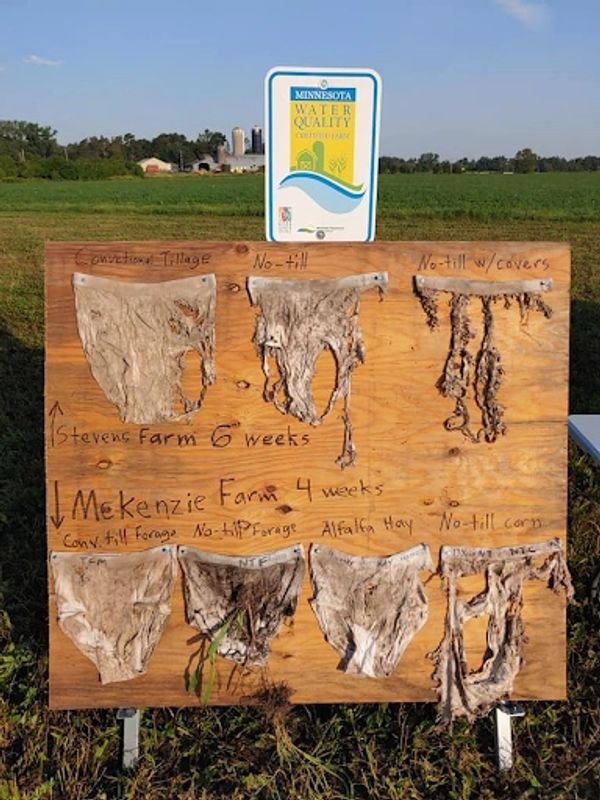
Minimize soil disturbance by using reduced tillage or no-till practices. This can help decrease soil compaction, increase water infiltration and encourage soil aggregate stability.
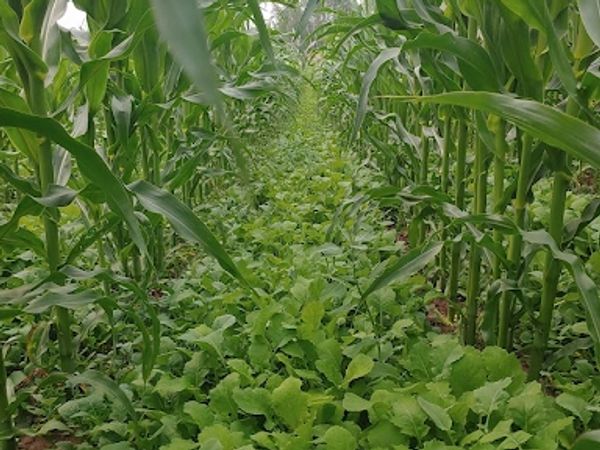
Keep the soil covered by introducing cover crops into your crop rotation, reducing tillage or using no-till practices. This can help to reduce erosion, increase soil organic matter, provide forage and increase biodiversity.
Maximizing plant diversity by implementing a crop rotation, using cover crops or interseeding a new species into an established stand of hay. A diverse plant community support diverse soil microorganisms.
Maximize the presence of living roots by keeping cover crops in the field over winter, using no-till practices, or keeping fields in perennial crops. These root systems help feed important microorganisms and reduce soil exposure.
Incorporating livestock if possible. Prescribed grazing can increase the productivity of perennial pasture and allow for multiple uses of annual crop fields by grazing cover crops and crop residue.
.jpg/:/cr=t:44.62%25,l:0%25,w:100%25,h:37.5%25/rs=w:1209,h:605,cg:true)
Cost-share assistance may be available to landowners when planting cover crops, and improving pasture or hayland. Eligible practices are not limited to the ones listed above, and our technicians can help produce a work plan for your property. We can also provide our Great Plains 1006 NT no-till drill seeder and Brillion Sure Stand Interseeder for your use.
Soil Health Questions?
Contact ryan.clark@carltonswcd.org or call 218-451-6118
Seeder Rental Questions?
Contact john.stoltz@carltonswcd.org or call 218-384-1129